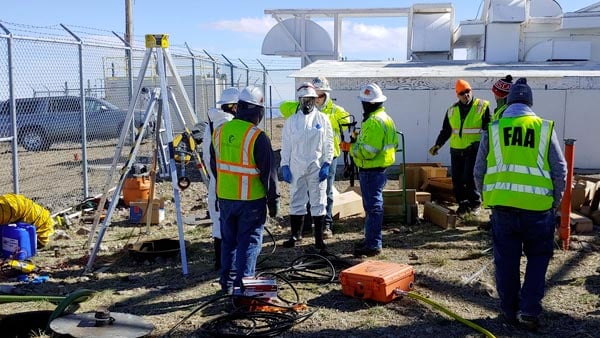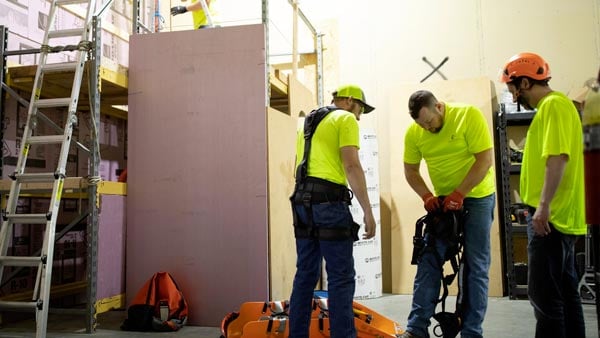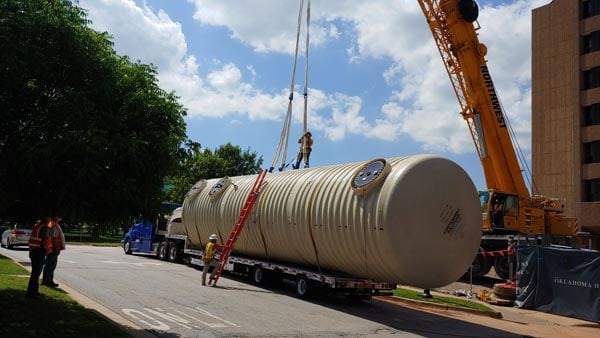
OCCU-TEC is a Federal Supply Schedule Contract holder. Issued by the General Services Administration (GSA), this contract can be accessed by any federal government agency or department.
![]()
OCCU-TEC has current career openings!
News and Iinformation
Posting Injury/Illness
Summaries
Feb. 1 - April 30
It's time to post your OSHA Form 300A, the summary of job-related injuries and illnesses that occurred last year. Unless you have 10 or fewer employees or fall within one of the industries normally excused from the Occupational Safety and Health Act's recordkeeping and posting requirements, employers are required to post OSHA Form 300A annually from February 1 to April 30.
A complete list of exempt industries in the retail, services, finance, and real estate sectors is posted on OSHA's website at www.OSHA.gov.
Growing Workers Compensation Costs Challenge Public Sector
In the wake of shrinking revenues and growing shortfalls municipal and
Kansas City, Missouri, is one such city facing the challenge. Eric Hallerud, the city's new corporate safety manager, informed the city council that Kansas City was suffering losses that on average were $2 million more annually than other cities its size. The amount was especially sobering considering its expected $62 million shortfall.
Some cities are taking drastic steps in the face of these budget scenarios. In what may be an extreme case, Lancaster, Pennsylvania's iapproach is to settle and let go of employees. Although many cities, and states, have seen their risk programs take budget cuts, others, like Long Beach, California, have seen their program costs drop due in no small part to implementing simultaneous safety and workers' compensation program improvements.
Even small cities, like Upper Arlington, Ohio, have found that they can still save money in their risk programs through self-insuring, a course many municipal governments have taken.
So what do public entities need to do in order to gain control of their workers' compensation costs? The most important element for cost control is understanding costs. There are four primary cost drivers to any workers' compensation program. Those include: Injury Frequency,Average Medical Cost per Case, Return to Work Duration, and Closure of Claims. These factors offer the first steps in understanding workers' compensation in the public setting.
If you are a public agency and need a partner that understands these factors, it may be time to call OCCUTEC. OCCU-TEC developed and implemented an individualized risk management process called ReClaimTM for the employees of the State of Missouri to reduce the losses in its self-insured workers' compensation program.
This program helped the state reduce its injury incident rates to less than one-half of the national average. Government budgets continue to shrink but the obligation to manage risk has not. If you need help understanding what your agency can do to address risk, it may be time to call OCCU-TEC at 1-800-950-1953.
|
Are you ready to save time, money and resources?
See inside for details on how AutoTrak™ Databases can end the paper cycle on items such as Asbestos, Lead, Environmental Site Assessment, Training, and MORE...!
SIGN UP HERE